Thursday, August 28, 2014

High quality images

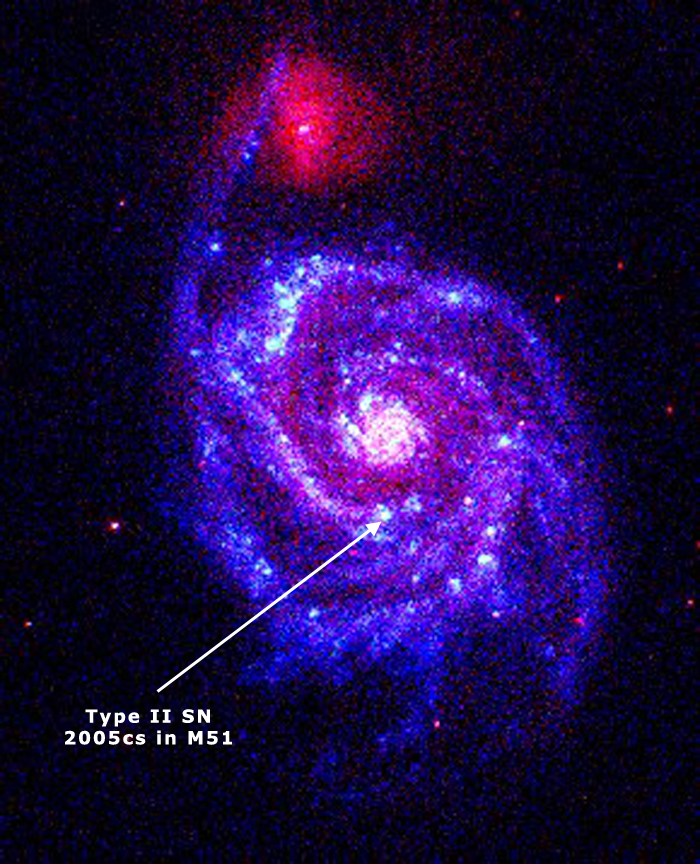
Isn't that image beautiful?  
When Swift was selected by Popular Science 
as one of the best new things in 2005, 
my picture even made it into a national magazine.


Wednesday, July 16, 2014

SOUSA: the Swift Optical Ultraviolet Supernova Archive

Swift

Optical

Ultraviolet

Supernova

Archive


SOUSA is an archive-in-the-making of all of the Swift supernova data.  In its final form, it will contain the images and intermediate photometry products as well as the final photometry.  To begin with, we are providing the revised photometry of SNe we've already published onto the updated photometric calibration.    More SNe will be updated as we go.  The paper describing the photometric reduction will be published in Astrophysics and Space Science and is available on astro-ph.

One use of the data we already have is improving what we do with Swift/UVOT during the rest of its lifetime.  Some of the plots in the paper should be useful for proposing new SNe for observation with Swift or preparing Guest Investigator proposals.  For example, the plot below gives a rough idea of the brightness of SNe in the mid-ultraviolet.  This allows one to estimate the distance to which one could detect a SN down to a given limiting magnitude.  The right axis of the plot gives the distance modulus for a limiting magnitude of uvm2=20.


 The limiting magnitude UVOT reaches is a function of the exposure time and the brightness of the underlying galaxy (due to our conservative method of subtracting the galaxy flux and propagating its uncertainty into the final photometry and limits).   For low contamination, 1000 seconds will reach a limiting magnitude of 20.  Based on the exposure time ratios for the preferred UVOT mode 0x223f, 3000 seconds of exposure are needed for the full 6 filters.


This plot shows the color and absolute magnitude evolution for a well observed supernova of most subclasses.  This could be used to estimate the class and/or epoch of a SN with UV/optical photometry.  The plots could also be helpful in planning what epochs could be reached to a given limiting magnitude.

Tuesday, April 15, 2014

Swift Supernova photometry version B14.1.dat format

I've made a new version of my UVOT supernova photometry code, I think fixing the upper limit issues with version 13.2 and fixing some overestimated errors when doing aperture corrections.  Before going through all the supernovae (yet again!) I would like to finalize the final output format that will be used by others.  Fits tables can be shared which provide all the nitty gritty details of source counts, coincidence loss correction factors, and such, but I would like these data text files to contain 90% of what anyone else would want.  Below is a sample for SN2005cf.  Suggests are welcome, especially if other columns would be useful outputs.

################
# SN2005cf magnitudes from Swift UVOT                                                       
# generated Mon Mar 31 22:35:16 CDT 2014 using version 2014.1                                        
# of Peter Brown's photometry pipeline                                                     
# and version Swift_Rel4.2(Bld31)_25Nov2013 of HEASOFT                                                     
#                                                                                        
# Data comes from the Swift Data Center                                                  
# A 5 arcsec aperture is used to measure the counts for the coincidence loss correction, 
# a 3 or 5 arcsec source aperture (based on the error) was used for the aperture photometry
# subtracting off the galaxy count rate in a template image  (if available),             
# and applying an aperture correction as appropriate (based on average psf in Swift CALDB)
# and zeropoints from Breeveld et al. (2011) which update Poole et al. (2008)            
# including a time-dependent sensitivity loss                                            
# to put the magnitudes on the UVOT photometric system described in that paper.          
#
#  Brown, P. J., Holland, S. T., Immler, S., et al. 2009, ApJ, 137, 4517
#  Brown, P. J., et al. 2014, Ap\&SS
#  Breeveld, A. A., Landsman, W., Holland, S. T., et al. 2011, in AIP Conf. Proc. 1358,  
#     Gamma-Ray Bursts 2010, ed. J. E. McEnergy, J. L. Racusin, & N. Gehrels                
#     (Melville, NY: AIP), 373; arXiv:1102.4717                                             
#  Poole, T. S., Breeveld, A. A., Page, M. J., et al. 2008, MNRAS, 383, 627
#                                                                                        
#                                                                                          
# Original reference for Swift observations:                                       
# Wang, X., et al. 2009, ApJ, 697, 380                                                                                   
# The data have been reanalyzed with the revised zeropoints            
# and sensitivity corrections of Breeveld et al. 2011. 
# Use of this final version should also reference Brown et al. 2014, Ap\%SS, submitted                             
#                                                                                          
# The underlying galaxy had the following count rates                                      
# in a 5 arcsec aperture at the source position 
# (missing filters list 0 but used a background region similar to the SN ):                
# Galaxy count rates in 5" aperture
# V          0.202       0.127865
# B          0.101       0.194355
# U          0.205      0.0936644
# UVW1       0.052      0.0255154
# UVM2       0.029     0.00996702
# UVW2       0.005      0.0109126
#                                                                                          
# There are no known issues with this photometry.                                          
# b and v data consistent with BV data from
# Pastorello et al. 2007, MNRAS, 376, 1301 S corrected mags
# S corrected mags from Wang et al. 2009, ApJ, 697, 380
                                              
# MJD Mag MagErr 3SigMagLimit 0.98SatLimit Rate RateErr ApSize Exposure DateObs Tstart Tstop                                   
#                                                                                          
# uvw2                                                                                     
53525.0428  17.794   0.114  20.315  11.085   0.683   0.072   3.000        283.226   2005-06-04T00:59:12     139539551.990120        139539839.754778

#                                                                                          
# uvm2                                                                                     
53525.0466    NULL    NULL  19.679  10.555   0.044   0.021   3.000        212.361   2005-06-04T01:05:21     139539920.975120        139540136.738778


################


The final format is now:

# Filter MJD[days] Mag MagErr 3SigMagLim 0.98SatLim[mag] Rate[c/s] RateErr[c/s] Ap[arcsec] Frametime[s] Exp[s] Telapse[s]
#                                                                                          
UVW2     53525.0428  17.794   0.114  20.315  11.085   0.683  0.1   3.000      0.0110322     283.23     287.76
Swift Supernova Presentation Plots

Here are a few general purpose plots highlighting Swift's SN observations.  Specific science results can be pulled from the papers, but this is just to show a few of the global characteristics that are science-y enough for the specific science in the currently published suite of papers.  Some plots like this might appear in my archive paper(s) though.


The above plot includes a well observed supernova from all of the major classes and most of the subclasses.  The redshift limit on the upper right refers to the distance at which we could detect a particular supernova phase with Swift UVOT for a limiting magnitude of uvm2~20.  
The Swift UVOT data could similar predict the detectability of supernovae 
by future ultraviolet missions.


Many satellites have contributed ultraviolet observations of supernovae over the years, but Swift has revolutionized the field.  Large samples allow the differences within subclasses to be studied in detail.  http://people.physics.tamu.edu/pbrown/SwiftSN/UVexplosionSwiftSNe.png

Monday, April 14, 2014

Swift/UVOT calibration

The calibration has been improved over the years, with the zeropoints of Poole et al. 2008 being updated in Breeveld et al. 2011.  As of 2010-11-30 these new zeropoints have been included in the Swift CALDB used with the HEASARC software (ie uvotsource and uvotmaghist).  A sensitivity loss of about 1% per year has also been discovered and is incorporated into the HEASARC software as of 2010-6-30. Many papers reference only the Poole et al. 2008 calibration, but we hope the new zeropoints and sensitivity correction are being implemented.

Filter Zero Point Error 

V 17.89  0.01
B 19.11  0.02
U 18.34  0.02
UVW1 17.44  0.03
UVM2 16.85  0.03
UVW2 17.38  0.03
White 20.29  0.04

 The site here also gives the AB zeropoints, but I don't list them here to avoid confusion.

The official filter curves are given in the CALDB  but in a fits format designed for certain x-ray analysis tools.  I have placed ascii version of the curves on this page.  The curves are the effective area of the filters in units of cm^2, ie multiplying the area of the telescope mirror with the transmission functions of the filters, reflectivity of the mirrors, and corrections to match the inflight observations.

Thursday, April 3, 2014

Ultra Super Super Explosions


I tried to add another superlative to the title:  Ultraviolet Observations of Super-Chandrasekhar Mass Type Ia Supernova Candidates with Swift UVOT.  It would have been fair, since these objects are extreme, but seemed cheesy.  Nevertheless, Ultra-Super-Super Explosions seems an adequate short title.

Tuesday, March 18, 2014

Bright Stars


Swift/UVOT has brightness limits to protect the detector.  The limit is approximately V~ 5 but depends on the spectral type and which filter(s) you want to use.  A 20' radius is checked to allow for different position angles and uncertainty in the spacecraft pointing.  Based on the color and optical brightness, the count rate in each filter is predicted.  If the predicted count rate is higher than the limit for a requested filter, that filter is skipped in the observing sequence and only the requested filters that are deemed safe are observed.  There is a bright star checker at the following link, but it only tells you which bright stars are in the field--it doesn't actually tell you which filters can and can't be observed.   Rough limits for bright stars, as well as the allowed angles from the sun, earth, moon, and planets, are posted at http://swift.gsfc.nasa.gov/analysis/uvot_digest/numbers.html

Because the white filter and the grisms let in photons from the widest wavelength range, they have the strictest limits.  The UV filters, on the other hand, are the least likely to be prohibited.  Note, these are the brightness limits of stars which can be safely observed.  The bright limits at which you can do photometry are much fainter (though different analysis using the halos or the readout streaks can push brighter than normal aperture photometry, see  http://adsabs.harvard.edu/abs/2013MNRAS.436.1684P  ).

In addition to the strict safety limits, bright stars can also interfere with the data analysis.  Stars of moderate brightness (I should quantify this better, but the star below is about 9th mag in V) will have a filled in halo with a 20 arcsec diameter.  A fainter halo is visible around it, with a radius of 140 arcsec, which gets brighter for brighter stars and will mess up the photometry of faint sources.  Bright sources in the halo may still be recoverable by choosing a background region of similar brightness. 


 [ details of the above image which I first sent out in reference to SN2007C ]
So you know the issues involved, I've attached an
image from the field of GRB060729.  (it is a UVW1
image so that we can see the effect in the UV of
bright stars--the effect is worse in the optical for
us, but the usefullness of the UV data is our main
concern.)  It shows the 20" radius bright core around
a 9th mag star and the 2' radius halo around an 8th mag star
(the halo is faintly visible around the fainter star
but not a dominant problem).  So being within 20" of a
star brighter than 10th or so would be nearly
impossible.  The larger halo would be hard to subtract
correctly but not a show stopper if the SN is
interesting and bright enough.  And if there are stars
brighter than 7th or so within 20' of the target
pointing we can't observe at all.  (That's something
the Swift people will check since it depends on the
spectral type, number of sources, and such, but just
so people are aware.)